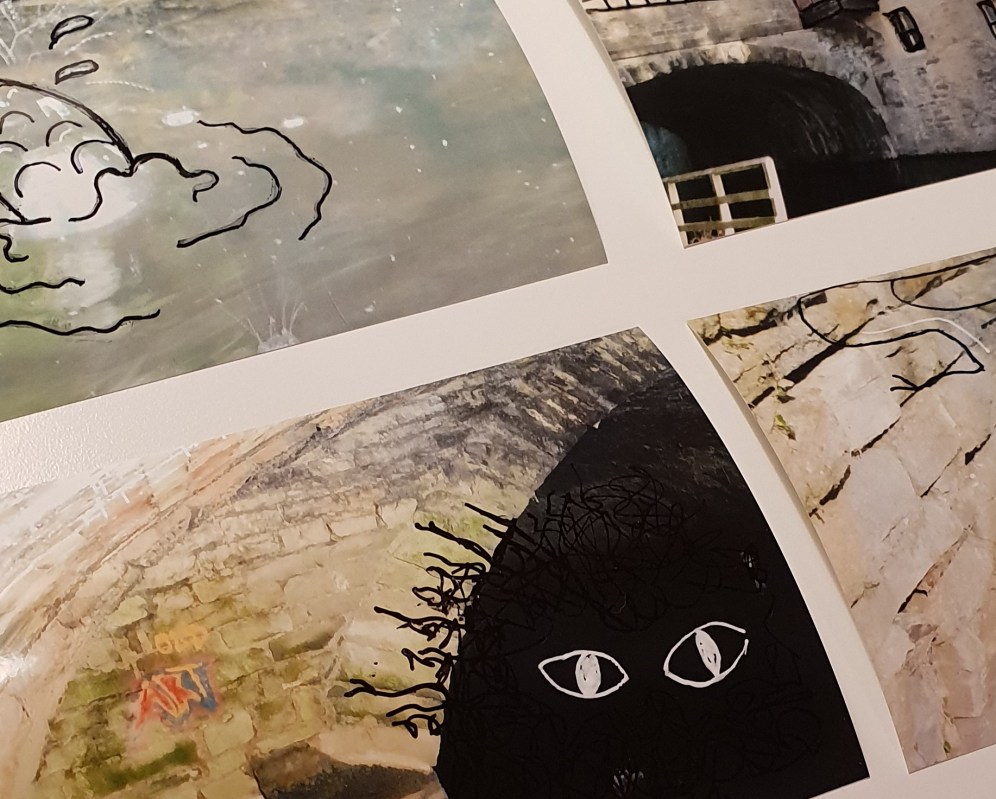
Bradley Beck
I wonder how many people walk past Bradley Beck, head in phones, conversation or worry, completely oblivious to the fact they’re walking straight past a place of wonder and play?
Every time I walk by here I can’t help but see it as I did as a child. I see the tree that was my home, the wall where only the bravest jumped across to and of course the lands local shop that holds anything you could possibly need. If I let myself indulge in this fantasy I can feel it spread – as I walk further down Ings Lane I notice that the sheep that graze nearby fields become mystical foreign creatures and any gaps in the dry stone walls become an opportunity for adventure or escape. And I smile.
We all had the ability to use our imaginations to create places to explore and play when we were younger, to see things in a narrative way. So why, as we grow up, do we tend to ignore this element of ourselves? In adulthood, people that choose to see and describe life in such a playful manner are told they are either “creative” or “childish” – it’s either given a good or bad descriptive, never really seen as normal behaviour. But surely it’s more abnormal to be ignoring such a natural element of our minds?
We’re human. We play, we create, we find we aspire and we explore. So why oh why do we shut this part of ourselves out?
For this weeks challenge, I wanted to share this element of my life with you. To do so my aim is to compose a small series of photos taken from Bradley Beck & Ings Lane and illustrate onto each one to show you how I see them.
Research & Inspiration
The Sketch of Life – Sébastien Del Grosso


The thing I’m most drawn to in this series is the interaction and the story that each photograph reflects. By displaying his thought processes in an obvious and visual way, Sébastien has allowed the viewer to enter into his mind space, making an atmosphere so genuine and authentic that you can almost hear the pencil sketching, feel each emotion and understand the thought processes that are sunken into each piece.
“The pencil drawing was bold and nervous to ensure that the viewer sees a work in progress; essentially, the drawing gives birth to reality.”
Sébastien explains within his portfolio that his illustration style was to allow the viewer to see the progression throughout his work. However I believe that his illustration has also added a sense of movement to each piece, by having such busy line work he has created animation that is completely still. You mind fills in the movements between each line. This is something I really admire about this series.
Link to Sébastien’s portfolio here.
Pencil Vs Camera – Ben Heine


I came across Ben Heine’s series through an article on The Endearing Designer. The first line of his quote felt like it could of been words out of my own mouth.
“I just make art for people. I want them to dream and forget their daily troubles.”
It told me that he too shared the desired to lead people back to their own sense of imagination, fun and play. And what better way to lead than by example? His series Pencil Vs Camera has covered such a wide range of ways that he can use pen and pencil to manipulate images through depth, scale and styles. I believe this series to be so relatable, in the fact that anyone could participate as all you need is some drawing materials & your own imagination. It’s inclusive, welcoming and rewarding to be able to put a part of yourself out into the real world and to be able to share and compare with others in ways which could of been impossible by words alone.
Here’s some images and a short videofrom Ben’s workshops & educational courses he has ran within at a few primary schools.


Imagine Finding Me – Chino Otsuka


“I become a tourist of my own history”
I find these photographs so surreal, it’s very hard to actually believe that these have been manipulated in the slightest. Even though giving the new photograph a completely different message by adding the current version of herself beside a younger version of herself – she’s still managed to keep the context of the photo’s relatively the same. I wonder if this is because she didn’t feel the need to change anything? She seems content.
Start with a Mark
During this weeks lecture, Susanna spoke about Start with a mark. I loved the idea of allowing to not only participate, but then allow them to publish perhaps there very first public piece of art. It’s a brilliant platform which I believe opens the doors for beginner designers as well as established designers to explore their initial thoughts and ideas immediately through a visual response.
“Every idea starts with a mark. Whether it’s a quick sketch, a handful of keywords or a mid-thought doodle, plotting something out is the bridge between the ideas in your head and the real world.
Vivian Maier


After watching the documentary on Vivan Maier that Stuart posted on Padlet (https://ihavenotv.com/finding-vivian-maier), I couldn’t help but want to know more. Perhaps this was due to the fact we only have limited resources to go on initially – as these days not being able to explore something fully feels a little alien to us , thanks to the internet – but there certainly was something about Vivian’s photographs that proposed a narrative past what the photo’s were actually capturing.
Why was she there? Did she speak to the people she photographed before hand, or was it just a passing moment? Was she really that confident to approach a stranger in the streets like that? Was that safe?
Creation Process
I began by going out and gathering photographs to use…


As well as age, I took into consideration how environmental and emotional factors could play into what kind of things I would imagine whilst passing the beck – for instance, during the day I see it as a place of comfort and fun, however I cannot usually bring myself to look at it when it becomes dark as it turns into a place that is extremely eery and mysterious. Due to this I choose to gather a few images of the beck at night time as well to display this contrast.


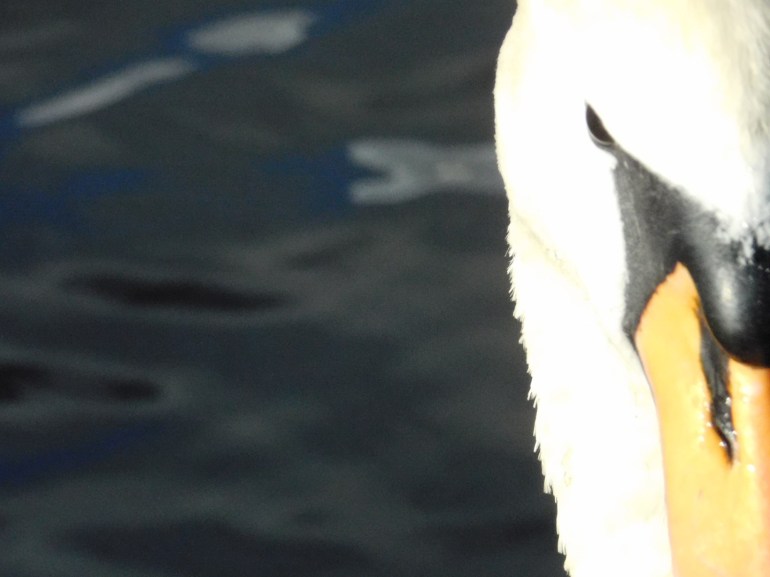
During this process, I managed to capture an extremely dramatic swan – if swans had album covers made, this would have to be up for consideration.
In order to experiment with what I was going to draw over the prints, I purchased some clear film folders, this way I could still create and practice illustrations to match the photographs without having to print of multiple copies of each one.


After narrowing down the photographs taken to choose which I wanted to print, I was still left with around 40 images to choose from.
To help me decide which I was going to focus on I separated them into 3 different piles, yes no and maybe. Some of the images weren’t even from Ings Lane, so this certainly helped with the decision making!
Using a variety of felt tips I began drawing in ideas for my selected photographs, at this point I was extremely grateful I had decided to use the clear film as I was surprisingly very indecisive with my designs. I wonder if this is to do with the fact that when I’m using my imagination, this is extremely fluid process and can change continuously, whereas in this project I was nailing one idea down to an object?


After several attempts at using the clear film method, I noticed I was overthinking things – perhaps from being able to see ‘too much’ potential by drawing straight over the image itself. So I moved across to my notepad to begin drafting out ideas. Immediately I found myself thinking much clearer and came up with a few ideas for specific images. However, using the clear film files did allow me to see what effect using coloured pens had on my photographs. As the images were already quite busy and vibrant, I felt that adding colour to them was almost a waste as the illustrations would tend to get lost and/or clutter the image. By sticking to black and white lines I found that it kept the illustrations more pointed and bold.
Once I had gathered enough ideas and I’ll be honest, courage, I started putting pen to the actual photographs.


Unfortunately as I had chosen some photographs to print in matte and other in gloss by mistake, I came across some issues using my felt tips on the photographs that had a gloss finish.
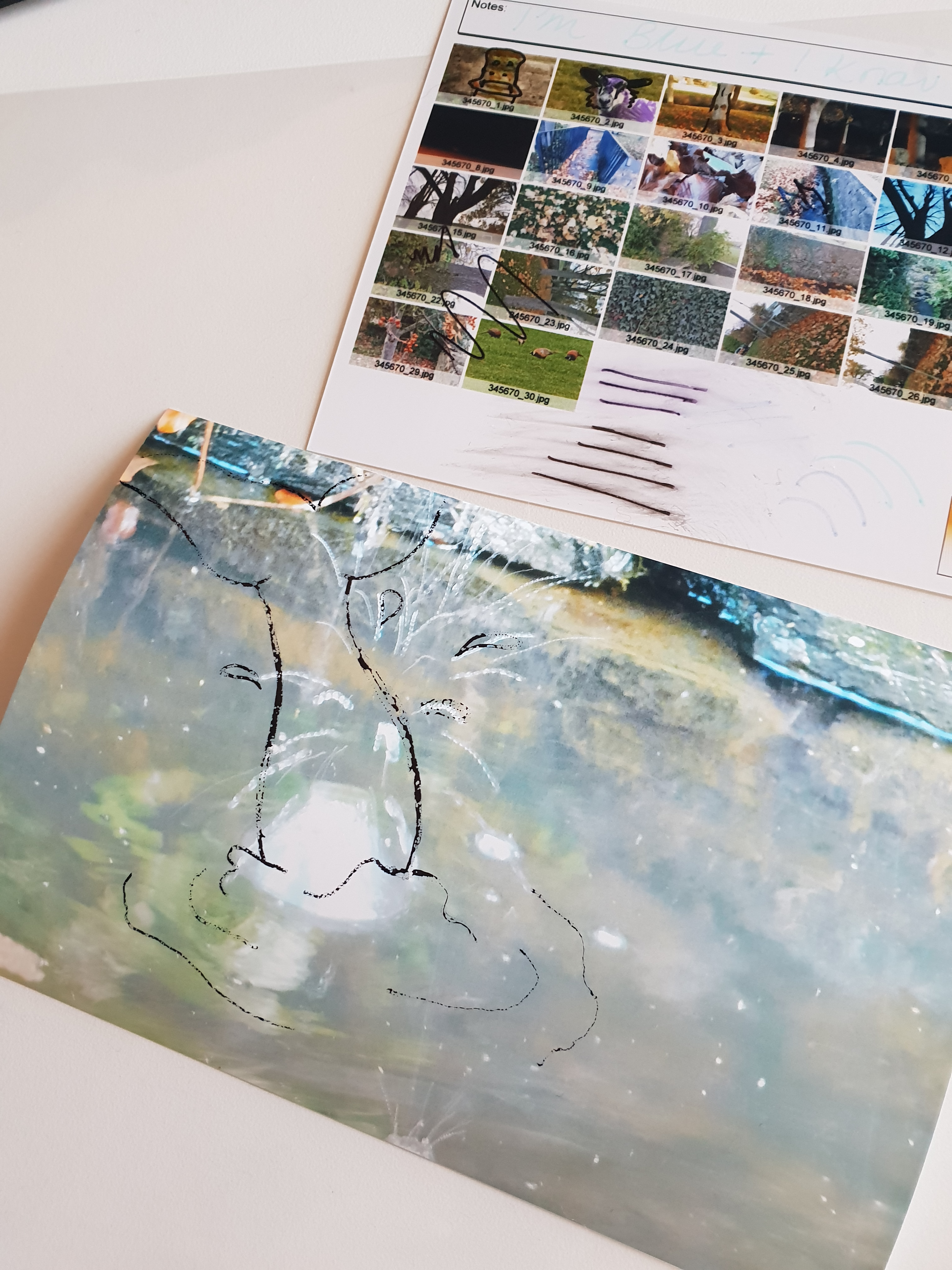
The pen marks couldn’t settle and began breaking up on the image. After experimenting with a few of my other pens I found that my drawing pens managed to stay on the photograph a little better, however as it still struggled to set onto the gloss finish it meant I had to be extremely careful not to smudge the lines as they would take a lot longer to dry. If they were to dry at all.


I had decided that I wanted to display my series of photographs through a scrapbook to continue my child-like tenancies and allow space for titles and/or narratives should I want to give them one. Using this method also gives me the opportunity to grow this series and continue adding photographs until the book is complete.
Even after a couple of hours the gloss photographs still hadn’t dried completely, so unfortunately some were smudged when I went to move them – lesson learnt for future endeavours.


Using a glue gun, I began sticking in the matte photographs, leaving room for a title or a narrative. To be sure that the pen wasn’t transferred onto the opposite photograph whilst I glued them in, I put a clear film folder in between each page.


Outcome – Scrapbook
I had a lot of fun overlaying my imagination over real life photographs. It’s left the door for further exploration of this style of work ajar and I can’t wait to re-visit this. This project was where I began to understand ways of which I could create a cross-over of two mediums to create a different outcome. The characters created through this process have potentials to become entirely different designs of their own – it would be really interesting to attempt to animate some of the scenes and characters created here.
These idea’s can be left as their own or used as a springboard to discover new perspectives that could be put to used in future designs. Or it could just be a space that I use to allow my thoughts to roam without aim or judgement, and archive of initial thoughts.
Although there are many potentials for what this book may become, I’m simply going to focus on the task of filling this book first.


Noticing the ignored
Bradley Beck
I love the night shots. I feel you kept hold of your initial idea and this is ok but I would loved to have seen more exploration of place using different media without an idea in mind (initially). You are bound to the idea so a full/ open/ initial investgation of place is hindered.
I love the idea of memory of a place meeting the place now I referenced Chino Otsuka the artist who meets her younger self through photographic manipulation. How can you contextualise this as an idea by referencing others work…. This is missing in your blog
I feel that you could extend your initial investigations much further – to explore the place through a variety of methods and means – historically, geographically, field visits, interviews, audio recordings, memory sketches, night walks, all of your material comes from you and is very personal which is great in one sense but but it limits the potential direction your project could take. However I am also aware that you only have one week and you work so I am aware of you making decisions based on time. Once again there is no research to back up your decision making, no references to other designers or artists, no comment on the research materials and lectures provided this week – this all needs to inform what you do and you need to blog about it. Revisit these comments and action for final hand in.
LikeLike