
Since formulating my project brief last week, I’ve been looking into ways that I can narrow it down and pin point a specific area of which I would like to improve in regards to doctor-patient communication.
Due to both personal experience and observation, I’ve noticed that a lot of people are finding it hard to actually get a diagnoses – particularly when it comes to mental health.

Annie told me about a film called Unrest that is based on the struggle one woman has when she comes down with the condition ME, otherwise known as chronic fatigue syndrome.
Who Can Diagnose a Mental Illness?
What Are the Benefits of an Accurate Diagnosis?
With an accurate diagnosis, recovery is possible. Even though Jared was nervous about being labeled with a specific condition, as soon as he began treatment, his life brightened in unimaginable ways. He had forgotten what it felt like to really connect with others, with his life, with his big goals. As he started to gain more clarity and confidence, he was able to take a larger role in his own treatment and recovery, working with his care providers.Once a person receives a true diagnosis of their mental health, they are no longer so alone. They can be assured that there are others going through similar struggles, and they may even begin group treatments alongside those peers they can relate to. Once a diagnosis is identified, there are known treatment options ready to address the underlying problems and ease the uncomfortable symptoms.A diagnosis is also like a language that various care providers can understand. So, they can collaborate to offer clients the very best combination of treatment options. And with diverse care providers on their side, an individual can have support for all areas of their life, including relationship, life skills, vocational, and self-care support. A diagnosis is a critical first step toward empowered healing.
Having a diagnosis helps those that receive them have peace of mind, sets them off on the right track to receiving the best suited type of care for them as well as giving them the opportunity to clearly communicate the basics of what they’re struggling with to other people.
Unfortunately, seeing as mental health condition symptoms often overlap, Doctors can often misdiagnose a patient multiple times or alternatively be quite reluctant to give out a diagnosis to a patient altogether – which is understandable to an extent but this can lead to patients becoming desperate to know what is wrong with them, seeking out answers to ensure that they’re not ‘just going mad’ or ‘making it all up’.
Now-a-days we have a wealth of information at our finger tips and it has become very easy to type in a few symptoms and receive a ‘diagnoses’ from Web MD or other such sites – these are often extremely unreliable and unsafe as this leaves the patient either thinking they have a serious illness that is a cause for great concern or on the flip side it minimises what they’re going through, leading them to ignore some symptoms that could be linked to more severe issues. For more examples on the issues that come with self diagnoses – please read The Dangers of Self Diagnoses.
So what can be put in place to help Doctors accurately find a diagnoses for their patient?
I will aim to create a communication tool that specifically focuses on simplifying and accurately communicating the symptoms the patient is experiencing. This could mean that I have to develop a different set of tools for each stage of receiving a diagnoses or alternatively have it all contained within one outcome. Although an app initially seems like a great way to gather a large amount of information in one place, I would like the outcome to come in a physical form as this just seems more personal and ‘human’.
How are Diagnoses Made?
A diagnosis will usually be made by an experienced psychiatrist working with other health professionals after a period of observation of the individual to identify symptoms. A person’s medical history and recent life events will also be taken into consideration. Family and friends can play an important role by discussing changes they have noticed in an individual’s behaviours. A check of the person’s physical health will also be necessary to ‘rule out’ any symptoms that could be contributed to a physical condition.
Questions to answer:
What are the stages/symptoms Doctors will look out for? Is it a check box system?
With so many overlapping symptoms, at what point to they cal an official diagnoses?
Mission Statement
Mission statement has three main components-a statement of mission or vision of the company, a statement of the core values that shape the acts and behaviour of the employees, and a statement of the goals and objectives. Features of a Mission a. Mission must be feasible and attainable.
Core Values:
- Clear, open doctor-patient communication
- To try prevent missed or diluted information
- Make communication regarding mental health easier without negative emotional experiences/connotations
- To highlight the core symptoms of mental illness that a person is suffering from
Goal & Objectives:
To create a communication tool that can be embedded into the mental health care system. This tool will aim to ease the current communication issues between doctors and their patients by finding alternative approaches to talk mental health symptoms and how it has been effecting them.
Mission:
I aim to create a deck of cards that will help the patient pin-point and communicate the symptoms of mental illness they’re experiencing clearly to their doctor. As mental illness can be vast and complicated, there will be several different packs of cards that will be created precisely to deal with the different levels/types of mental illness. These will hopefully aid the doctor when it comes to providing the patient with the appropriate kind of help as well as be able to give them a diagnoses.
I will be first focusing on the set of cards that will be made available to those that are going to the doctors for the first time regarding their mental health – these cards will hopefully help patients to ‘come out’ about what their going through without provoking too many negative emotions.
– Write 1 positioning/mission statement to outline your project goal.
– Create 3x mood boards (with captions) that visualise your research into trends, that are appropriate to your project brief, and how they could be utilised to deliver your project goals.
Mood Boards
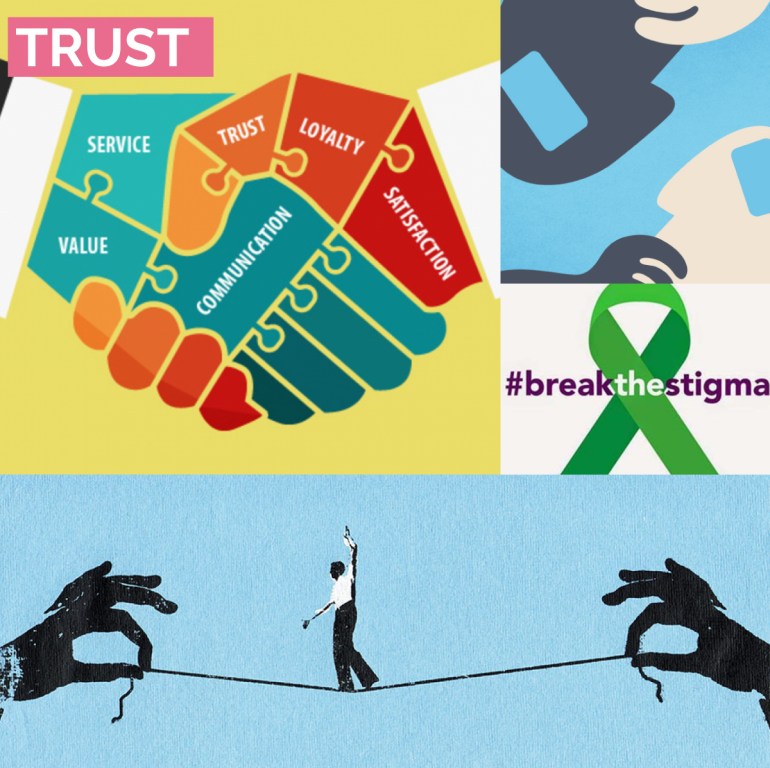
During my research I’ve found that a lot of the doctor-patient communication issues stem down to how much trust they have within each other as well as themselves. Doctors have spoken out about how they ask the patients to repeat their stories as they don’t trust either their colleagues note taking, or that the patient has revealed the full truth of their situation yet. Similarly, patients can hold back from revealing everything to their doctors, due to the feeling of vulnerability, or that they won’t be heard even if they do speak.
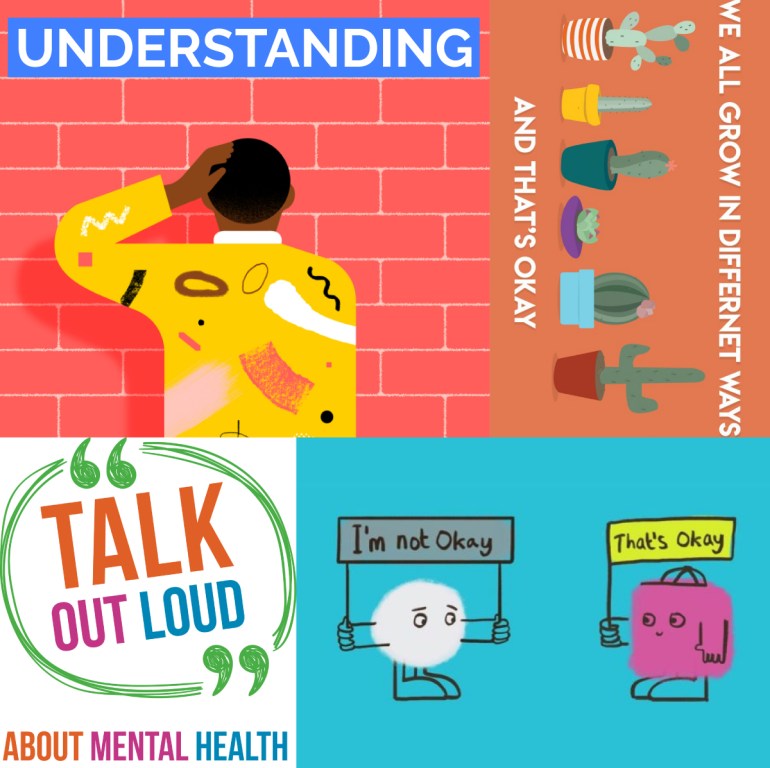
Mental illness can come in many shapes and sizes, in fact, two people suffering from the very same thing may find that their experiences are completely different, for this reason it’s always been difficult to fully understand the nature of mental health and the impacts it can have on us. Patients who are struggling with their mental health may not always be aware of it, and seeing as mental health can have a lot of physical impacts on the body, it’s easy to be misled into thinking that the issues their experiencing are from something completely different. Gaining an understanding of the different types of mental illnesses and the full effects it can have on a person is a vital step for us to become fully aware of how we can help ourselves as well as other people who are struggling.

Communicating feelings is hard – especially when it’s something as deep set as mental illness. Those that are struggling often find it difficult to find the words to explain what their going through, and even if they do know what to say, it can be difficult to actually speak the words. Saying what you’re going through out loud can provoke an array of emotions, making it difficult and messy. From the receivers end, so in this case the Doctor, it can be just as hard to understand what it is they mean, which can lead to an misunderstanding on what it is the patient is going through. If I were able to form a fluid communication method I would hope that this would not only help the patient from an emotional perspective, but it should also be able to speed up the process allowing them to receive help as soon as possible.
Similar Projects
https://www.stroke.org.uk/what-is-aphasia/communication-
toolshttps://stickmancommunications.co.uk/products/
 Sian Laüra