
Research

How can Doctors Improve their Communication Skills? – here
The ultimate objective of any doctor-patient communication is to improve the patient’s health and medical care.2 Studies on doctor-patient communication have demonstrated patient discontent even when many doctors considered the communication adequate or even excellent.8 Doctors tend to overestimate their abilities in communication. Tongue et al9 reported that 75% of the orthopedic surgeons surveyed believed that they communicated satisfactorily with their patients, but only 21% of the patients reported satisfactory communication with their doctors. Patient surveys have consistently shown that they want better communication with their doctors.2
Lack of mutual ground? How can we establish a mutual ground of communication?
Effective doctor-patient communication is a central clinical function, and the resultant communication is the heart and art of medicine and a central component in the delivery of health care.7,8,16The 3 main goals of current doctor-patient communication are creating a good interpersonal relationship, facilitating exchange of information, and including patients in decision making.4,7,11,17…
…Good doctor-patient communication has the potential to help regulate patients’ emotions, facilitate comprehension of medical information, and allow for better identification of patients’ needs, perceptions, and expectations.4,7,17 Patients reporting good communication with their doctor are more likely to be satisfied with their care, and especially to share pertinent information for accurate diagnosis of their problems, follow advice, and adhere to the prescribed treatment.1,6,7,9,14,16,18–23 Patients’ agreement with the doctor about the nature of the treatment and need for follow-up is strongly associated with their recovery.10
Learning from Patient Complaints – here
Four main themes of communication errors were identified, namely: non-verbal (eye contact, facial expression and paralanguage), verbal (active listening and inappropriate choice of words), and content (poor quantity and quality of information provided); and poor attitudes (lack of respect and empathy).
Barriers For The Doctor and The Patient – here
An interesting point in this article is one of the issues they mentioned could occur form the Doctors side, which is not providing preparation materials in the waiting room for the patient to gather their thoughts and questions.
Not making available pen and paper in the waiting room and examination room so patients can organise their questions and take notes
Why do patients have to repeat their stories? – here
So is the repeated story phenomenon a useful, error-reducing redundancy in our health care system? A necessary annoyance in an increasingly complex medical system involving multiple doctors and departments? A vestige of the Every-Man-For-Himself doctoring model in which you must re-check everything and trust no-one? Probably all of the above. But I wonder, in our slow but undeniable transition to team-based care, to what extent should we rely on the story as it has been collected? Where is the right balance between efficiency and patient comfort on the one hand, and Getting It Right on the other?
Themes of the main communication issues:
- Vocabulary/Choice of Words
- Attitude & Emotion
- Diluted/Lack of Information
- Lack of Confidence
- Time Limits
- Lack of Preparation
- Repetition
Brief
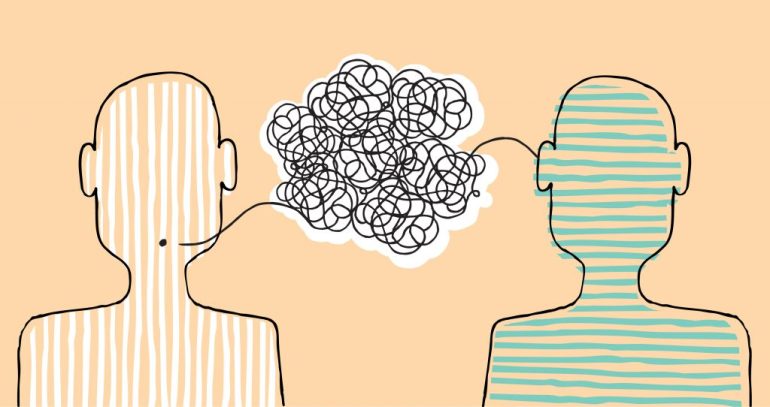
Communication. We all do it, we all do it every day whether that be through our body language, our composure of through our choice of words. Seeing as we do it so effortlessly, you’d think we have this down to a T, right?
Unfortunately, this isn’t always the cause, we can often find ourselves misunderstanding what’s been said, leaving us to come to our own conclusions on what it is the other person is trying to convey. We have particular issues with this when it comes to talking about our mental health. Due to day to day issues such as busy schedules and social anxieties a trip to the Doctors isn’t always a simple as just that. Flustered and on the spot, it’s easy to miss out potentially vital information or tune out when someone else is speaking to you.
Patients may be asked to constantly repeat their stories over and over to several different Doctors, making them feel unheard, uncomfortable and even dissociated from their own problems. Unfortunately these cases can sometimes result in the Patient not receiving the right amount of care they require, which can ultimately result in the further downfall of their mental health. Seeing as the effects of mental health are already such a difficult thing to put into words, it just doesn’t make sense to continue making this process even harder.
For my Creative Conscience submission I would like to focus on creating a communication tool that can aid both the Doctor and the Patient to make for a fluid and comfortable experience. Seeing as effective doctor-patient communication is a central component in the delivery of health care, I would hope that this tool would allow for better identification of patients’ needs, perceptions, and expectations.
From what I’ve found already, the main areas of doctor-patient communication issues stem from;
- Vocabulary/Choice of Words
- Attitude & Emotion
- Diluted/Lack of Information
- Lack of Confidence
- Time Limits
- Lack of Preparation
- Repetition
I’ll be later be aiming to conduct some first hand research by speaking with medical professionals, members of the public and psychologists to gain a better understanding on how we could overcome these issues.
As I’ll be aiming to create a tool that will be available to all, the forms of which the communication tool will take have yet to be decided, however here are some potential outcomes:
- An mobile app
- Something physical such as a journal, or a pack of cards
- Organisational tools
- A website
Some alternative outcomes may come to light during the research process too.
I’m hoping that this project will result in a tool or at the very least a series of conversations that will aim to relieve the current communication issues we have between Doctors and Patients.
If you have a story of your own to share or any insight in what could help – get in touch, let’s talk.
 Sian Laüra