Studio Interviews
This week we have been looking further into starting our own self initiated projects. After listening in to a few interviews from studios such as; Hey, Frost Collective & Werkflow I found it interest that the concept of giving yourself a strict, and sometimes very restrictive, time scale to work on can help the project momentum.
This is something I’ve experienced first hand as during each of the MA modules, we’ve consistently had to produce something in very short time scales, and although this can sometimes cause frustration as there isn’t always time to explore the project further, it’s also extremely beneficial. Having such short time scales forces you to produce creative ideas at rapid speed, meaning you gain a lot of raw materials to work from – it also prevents you from not over thinking every detail and getting stuck in a creative rut. I believe that if we’re allowed a long stretch of time to focus on a project, we’re more prone to procrastinating and focusing on other time restrictive projects, such as client work, before getting round to the self initiated project – meaning we end up just doing the work in a short period of time anyway, or perhaps not getting round to it at all.
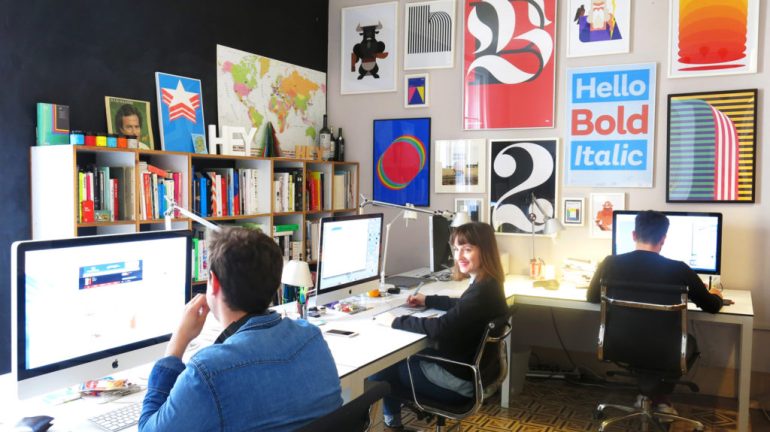
I liked Veronica Fuetre’s (Hey Studio) idea of giving her and her team a 4 day time limit to engage with a project and explore ideas, these short bursts of energy are crucial to giving a project a kick start or to re-fuel the process.
Hey Studio’s advice on poster design


Vince Frost from Frost Collective spoke about using interaction as a tool to keep him passionate about what he’s working on. By hosting podcasts and events he is able to meet a wide range of people who bring new fresh perspectives on a project or concept – this human centred way of working is an excellent way to keep in touch with the community and evolve your ways of working. There’s also a rewarding factor about being able to interact and engage with the community directly that I see this as a really healthy way to keep a studio’s momentum.
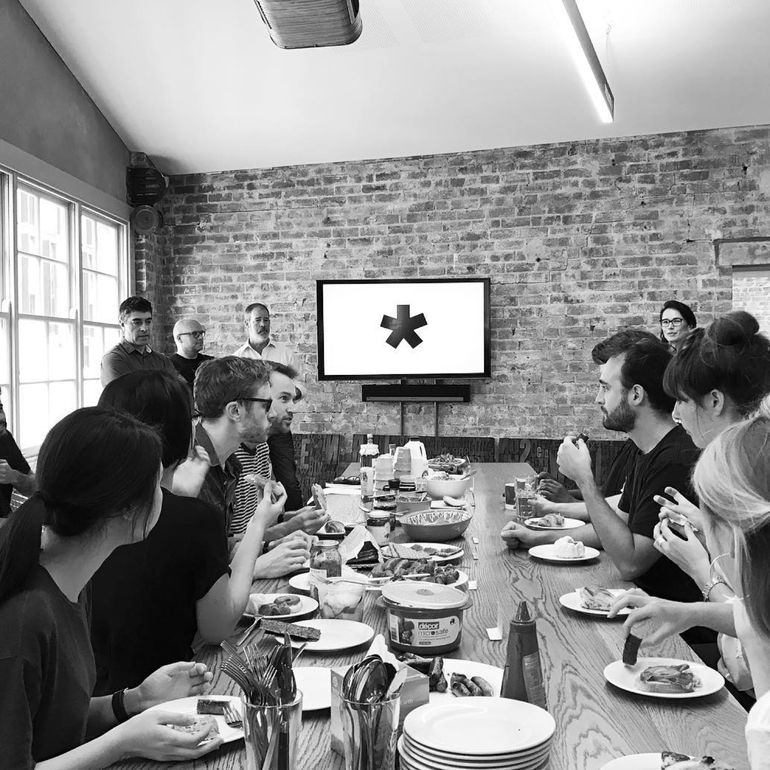
Sam Bompass brought up the issue he sometimes faces when he gets excited about an idea, tells everyone about it but then later struggles to make it actually happen. I wonder if this is an issue that could be prevented by channelling the excited energy of telling people into documenting the idea and coming up with potential routes it could take. Then later using the engagement as a tool to re-light that kick to get the project up and running. But on the other hand, perhaps not every project concept has to be finalised, just having the experience of coming up with ideas could be a domino effect that leads it way to the realisation of a much larger project that can be accomplished.
Project Proposals
When looking back on my previous reactions and outcomes to given tasks, I’ve noticed that I always seem to lean them towards a similar path. My main interests seem to be within communication and engagement with myself and the audience. When given the opportunity to choose a project of my own choosing they’ve always revolved around finding different ways to approach mental health, bringing others happiness and finding new ways to communicate a perspective on an object or an environment.
The same patterns were reflected when I created a mind map to quickly write down potential project ideas. As well as the topics staying along the same lines, it’s also clear that I’m wanting to create something using different tools such as 3D model making and stamping. I think this is from how when using ‘physical’ methods of working I can begin to feel more connected to the project. Having a hands on approach gives you a different level of involvement which I don’t think you can necessarily get via working through a screen.

So with that in mind, I came up with these 4 potential projects…
Communication – I would like to explore other ways that we can express emotions and energy levels of ourselves, objects and our surroundings. I would like to explore this through a series of mediums, such as illustration, animation and 3D model making.
Happiness – I would like to explore ways of which we can spread joy in the less joyful areas, such as public transport stations, city centres and roadsides. This could potentially involve implementing decorative quotes or designs, or by placing methods of play into the area such as games and other interaction methods.
Colour – I’d be interested to begin an experiment to try and see the true effects that colour has on our mental health. Previous studies have shown for it to have a positive effect so I would like to put this into practice to see the scale of its effects. I’ll be exploring different methods to find out how we can begin to embed colour into our everyday lives.
Engagement – How can we encourage interaction within the general public? I feel it’s becoming less common to engage with small talk with strangers and this is partly due to us no longer needing to do so as we have constant entertainment via our mobile devices. I’d like to explore social anxieties to see if these statistics have grown and if so find out why.
Colour Project
I’ve recently been in correspondence with a group that was gathering idea’s on how we can make the people of Skipton engage with their environments more. After our initial meeting, I sent over a copy of my proposal that I had originated during Module 2:
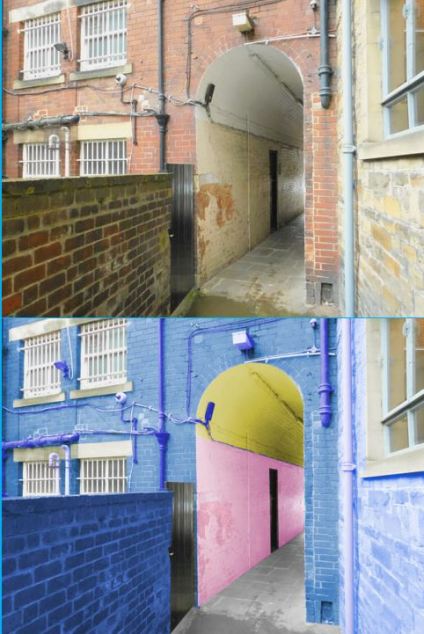
Colour is something we neglect, even though it is proven to have a large impact on our mental health. Whether we’re aware of it or not, colour can cause intense switches of emotions, impacting our behaviours and moods – further reactions to colour can be biological, such as releasing serotonin and lowering blood pressure.
So why is it we build grey environments for us to live and commute within? Through this campaign, I aim to bring colour back into our lives, starting with the buildings that we live, work and shop within.
To do this, I intend to start with individual communities. As this project will be impacting the entire community, I want everyone to take part in this process. I plan to introduce a “canvas” – this will be a large blank area upon a local wall with a simple question posed “what is our communities’ colour?”. Paint will be provided so the participants can then paint a swatch of their desired colour. Ultimately, I’d want this to lead to several communities creating their own palettes, leading to the connection of stories & relationships.
Community participation is going to be pivitol to this campaign, as without their input the wall will be blank, leaving the choice of the communities’ colour to fall to the few rather than the many.
Since I had sent across my proposal, we’ve had further discussions about how we could adapt this original idea to fit into the limitations we had (permissions, funding, time) for their current project. I’ve recently heard back from them with confirmation that they would like to go forward with this idea.
“After reading your Colour Engagement proposal, I realised it resonated a lot with what our group have identified as missing in Skipton – colour!”
I’ve had a chat with the group about potentially joining up and making a mural / colour project happen in Skipton and they are keen to collaborate with you.”
I’m extremely excited to see how this will unfold and develop, but until then I’m going to work at putting together a few more ideas that could possible aid in the realisation of the original project proposal.
Project Brief


 Sian Laüra