
Interviews

Kenjiro Hato brought up a method he uses within his practice that resonated with myself and how I conduct my own work. Using play as a method of working, a tool almost. Through play we can learn and push boundaries without much thought at all, giving us the potential to discover new potentials within design. It allows us to take out the logic within the creation process and form ideas that we may of otherwise not seen plausible.
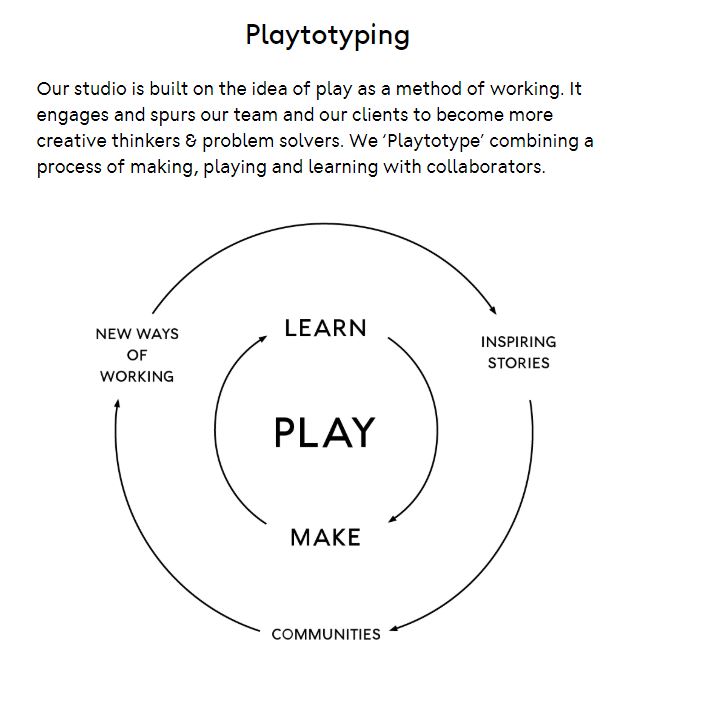
I love this take on it as it allows us to continue enjoy doing what we do, include others and approach new areas of design. When given the chance to collaborate on a project, you are given the chance to embed other individual perspectives and ideas rather than just your own. What once was a personal voice becomes a collective voice, creating new combinations.
He also mentioned about how when working on a project for the community, he likes to keep the focus on the fact he’s creating FOR the community, rather than AT. By this I believe he means that he wants to ensure that the core of the community is kept within the heart of the project, so he doesn’t end up creating something from his own self desire and place it within the community, framed as if it was what they wanted/needed. By listening to the community you are creating for, you are keeping your project on track of their desires, wants and needs completely. Although you will make some if not all of the design choices, the core feel of the project has come from them and that’s what is important.

During the interview with Sarah Boris, she spoke about how she has become to feel more connected with the world, thanks to the globalisation that has come from the internet. Social medias, website and blogs are what has sometimes got her known to some audiences and through this she’s also got to work on some amazing collaborations. However she did mention the importance of making sure that these relationships don’t always stay online. If possible, it’s important to try and meet with them physically, as there is a sense of interaction you get through that that you will never be able to achieve online.
I wholeheartedly agree with this – face to face reactions gives you so much more communication, from their facial expression to their tone of voice there are multiple hidden messages within each interaction that you could so easily miss when communicating online. It also resonates hugely when it comes to collaborating with another designer – if you were to begin to work with each other physically, you can see what the other person is working on, you can sketch up concepts and make sure you are constantly on the same page. However when it comes to working from home, there are some key elements of communication that could be missed, resulting in you both working from different pages. This slows down the process and can result in the project becoming less enjoyable as there is a frustration within the methods of communication.
Collaboration Processes
To demonstrate the different methods of collaboration, I wanted to create an example of a series of them being put to use within a really simple project.
Previous to this recording, I had only told Chris (the star of the show) that the aim of the ‘project’ was find a way to create a final design from our original shapes.
We took it in turn to create a series of shapes across the page, these were put in place to reflect different ideas and concepts that may arrive at the beginning of the project. From then all we just aimed to create a final image from what we had drawn.
The steps that I focused on during this video were; conversation & debate, brainstorming, discussion, combining & plusing. All of these phases came completely naturally and I believe this short video did a good job at capturing the creative process organically.
 Sian Laüra