“Activism is in a crossroad, innovation or irrelevance “
Carol A Wells really fed the passion of poster design into me this week. Especially when she went back to explain that one of the main causes for posters were because around 56% of the population were illiterate. People are so driven to share their message that they’ll do it in whichever way they can – and even though this method of communication is so competed with the sheer volume of imagery we have today, posters are even evolving and keeping up with the competition. Simply through innovation.
“Until the lions have their historians, tales of hunting will always glorify the hunter”
Body Storming
a user centred design process


Body storming is a direct empathy tool researchers can use to submerge themselves in their user’s environment, giving them a clearer perspective on any potentials challenges they may face. By experiencing the user’s perspective first hand, it allows for the researchers to develop a closer connection to the issues they’re looking to resolve, giving way to a deeper reflection and thus, a further developed solution. This method is ideal to use at the beginning of a project as it would give researchers the advantage of narrowing potential routes down quickly and efficiently, highlighting the insights that may lead to a positive impact, right from the get-go.
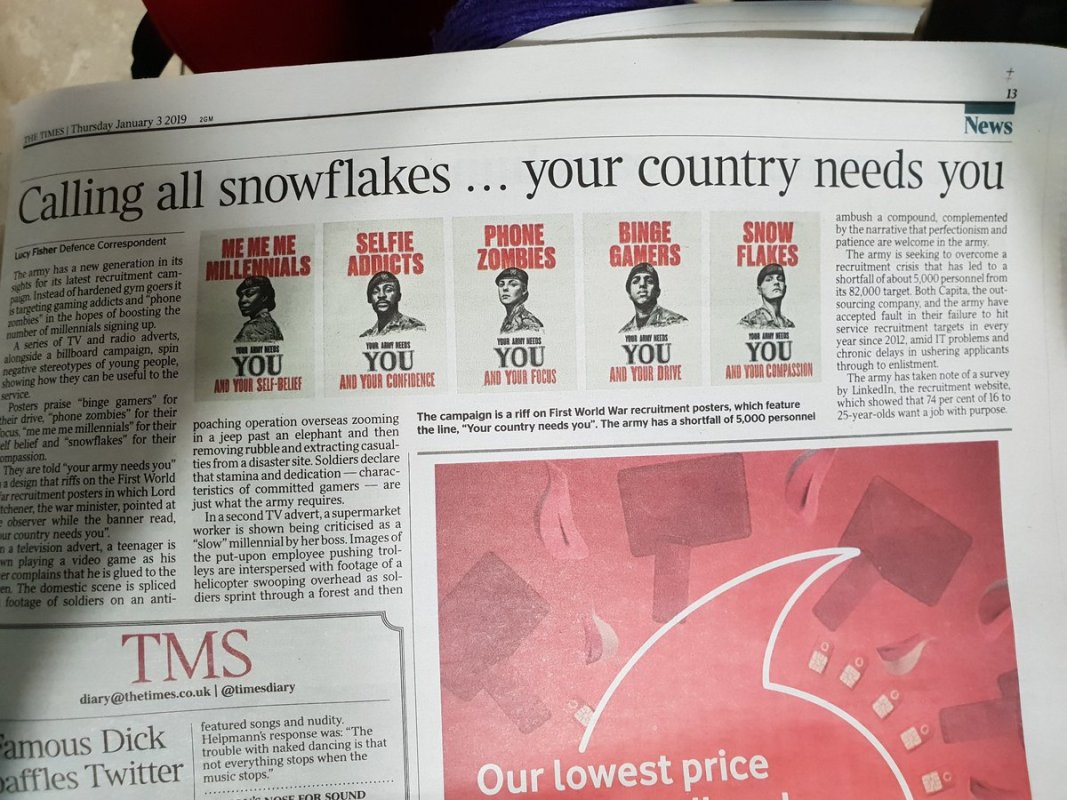
I Saw this ad on the TV a little while ago and it still makes my stomach turn. This along with other TV ads and posters, is being used to target millennial’s based on assumptions and the generalisation of a generation.
This campaign focuses on the stereotypical definitions of millennial’s. The ads chose specific words and/or traits and blow them up to create the illusion that the only place where the newest generation belong is within the Army.
The biggest eye opener about this campaign were the posters they chose to release. Understandably a lot of people were offend by their content and although you could argue that the creators designed these in attempts to give the millennial ‘brand’ a new perspective, it’s hard to ignore the obvious insulting nature of this series.
Snowflake Army Campaign
and what was wrong with it
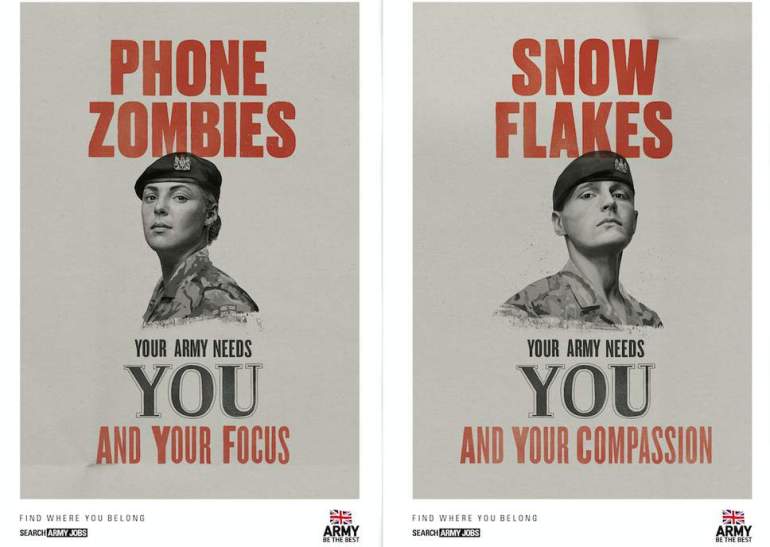
Last October (2018), 12,130 passed basic training within the army, but 14,760 dropped out – leaving the army out by around 5,000 bodies. So, what better way to combat this than to release a marketing campaign directly aimed at the ‘millennials’ – or as they so kindly put it, the ‘phone zombies’?
This campaign focuses on the stereotypical definitions and assumptions that are made of the youth of today. With their audience predominantly being social media users, they’ve optimised their campaign by having the posters show subtle movements of the character presented when viewed online – creating a relatable and warm presence in comparison to the cold stare of the static posters. Combined with this, they use specific words and/or traits, such as the term ‘snowflakes’, they attempt to create the illusion that the only place where their audience belong and/or will be valued is within the Army. However, as these terms are generally used in a derogatory manner towards the millennials, instead of providing motive to join it acted as an insult, generating a huge uproar within the public.


The timing of the campaign was also a raise for concern as it has been planned and executed flawlessly to be released around GCSE results day. This provided them with a a sure way to attract those that had remained unsure about what their future holds for them, and in some cases, it could almost have acted as a welcoming whisper of stability and belonging to those in need.
In defence of the campaigns agender, Nick Terry, the marketing director behind this campaign, stated: “The message we’re trying to get across is the Army doesn’t actually recognize those labels and we just see the potential in that generation, whoever they are, whatever their background.” – although I’m not convinced that this idea was generated effectively this time round, I do like the alleged thoughts behind this, so it would be nice to see a revamped version in the future. This time round it’s clear that this entire campaign was created based on presumptions and hadn’t managed to keep the audience in mind throughout the creation process. This campaign would hugely benefit from gaining further insight to their audience, leading to empathy and ultimately a relationship.
Turning this mocking, predator of a campaign into a trustworthy peer.
 Sian Laüra